Spreadsheets and the free EU templates are included too, because most importers try those first.
Why this matters now
CBAM has stopped being paperwork. It is money now. Four reasons:
- Certificates are real cost. The certificate price follows the EU carbon market, which was around €75 per tonne of CO₂ in early 2026. Every tonne you report becomes a number on an invoice.
- Default values carry a markup. Use the EU default values instead of real data from your supplier and you pay a markup on top. It is 1.10 times the cost in 2026 and rises to 1.30 times from 2028. Real supplier data is almost always worth the effort.
- Verification is coming. An accredited verifier has to check your annual declaration. So you need to show where each number came from, not only the number.
- Most SME importers are unprepared Supplier data sits in email threads and spreadsheets. There is one exemption: if you import less than 50 tonnes of covered goods a year, CBAM does not apply to you. Above 50 tonnes it applies in full.
Manual routes vs dedicated CBAM software
Most importers start by doing it themselves, in one of two ways.
Spreadsheets from scratch cost nothing and give you full control. You also do all the work. You match CN codes to the covered goods. You pull your import declarations and check them against your ERP by hand. You chase suppliers by email. You apply the calculation rules yourself, including the shrinking free allowance and the default-value markup. Then you build a file the CBAM Registry will accept. It is slow, it is easy to get wrong, and next year you start again.
The EU’s own free materials are a real starting point, and they are free. The Commission publishes the default emission values. It also publishes an Excel template your non-EU factories can fill in and send you. And the CBAM Registry now lets a factory outside the EU upload its data once and share it with the importers who need it. The limits are just as real. There is no cost planning, no way to chase suppliers, no checking of what they send, and you still assemble everything yourself.
Dedicated software does more. It walks you through collecting supplier data. It calculates to the rules. It tracks certificates and cost. It produces the file the registry accepts. And it keeps your data, so next year is an update rather than a rebuild.
| Spreadsheet | EU free materials | CBAM software | |
| Up-front cost | None | None | Low–medium |
| Supplier data collection | Manual email | Template + registry sharing | Guided portal |
| Compliant calculation | Manual formulas | Default values only | Built-in engine |
| Certificate & cost view | Manual | No | Yes |
| Registry-ready output | Manual | Partial | Yes |
| Year-over-year reuse | Manual | Partial | Yes |
CBAM software at a glance
If this is your first look at these tools, read the second column first. It tells you what each one is.
| Tool | In one line | Start today, no sales call | Free to start | Collects supplier data | Plans your certificate cost | Registry-ready XML | Regs in-tool | Pricing |
| Yodiwo | CBAM cost forecasting inside a full ESG marketplace | – via demo | — | ✓ built in | ✓ multi-year | ? | ✓ | Quote |
| CBAMtrack | Sign-up-and-go CBAM tool | ✓ | ✓ | ✓ | ✓ | ✓ | ○ | €0 / €79 / €199 per month |
| The Sustainability Cloud | Freemium tool + supplier-side product | ✓ | ✓ | ✓ | ✓ | ✓ | — | From €0 |
| Dubrink | Shared importer–supplier platform | ○ waitlisted | ○ free if supplier pays | ✓ | ✓ | ✓ | — | €1,990–2,990 / year |
| CORA (cora-online) | Free calculator + consulting service | ✓ calculator only | ✓ calculator | ○ via consultants | ✓ | ○ | ○ | Consulting engagement |
| ClimEase | Software plus human supplier experts | — | — | ✓ + experts | ✓ | ? | ? | Quote |
| Cozero | CBAM module in a carbon platform | — | — | ✓ | ✓ | ? | — | Quote |
| IntegrityNext | CBAM in an enterprise supply-chain suite | — | — | ✓ | ✓ simulator | ✓ | ○ | Quote |
Legend. ✓ means supported. ○ means partial, or supported with a catch. – means not offered, or not how the tool works. ? means we could not confirm it publicly.
The best CBAM software in 2026
CBAM-first tools for importers
- Yodiwo CBAM Management
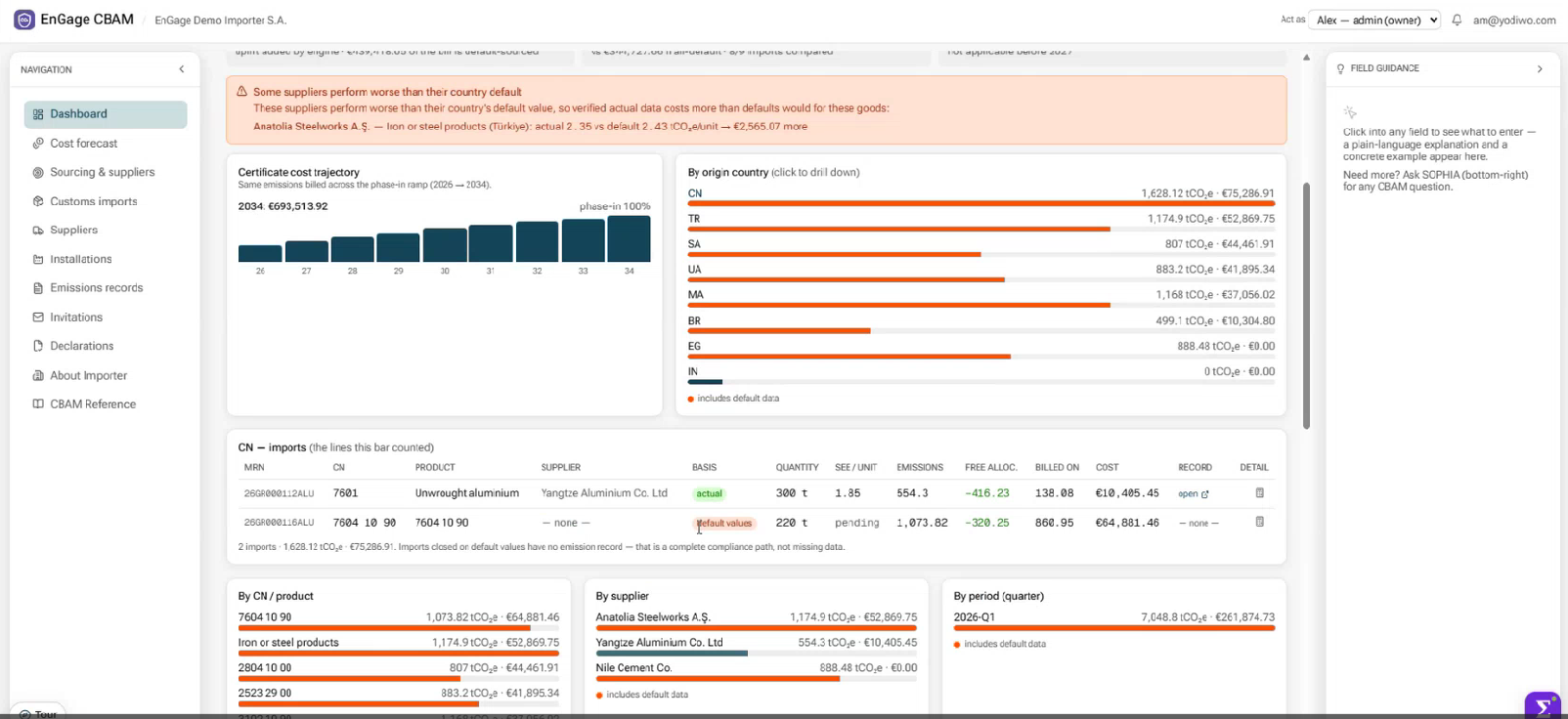
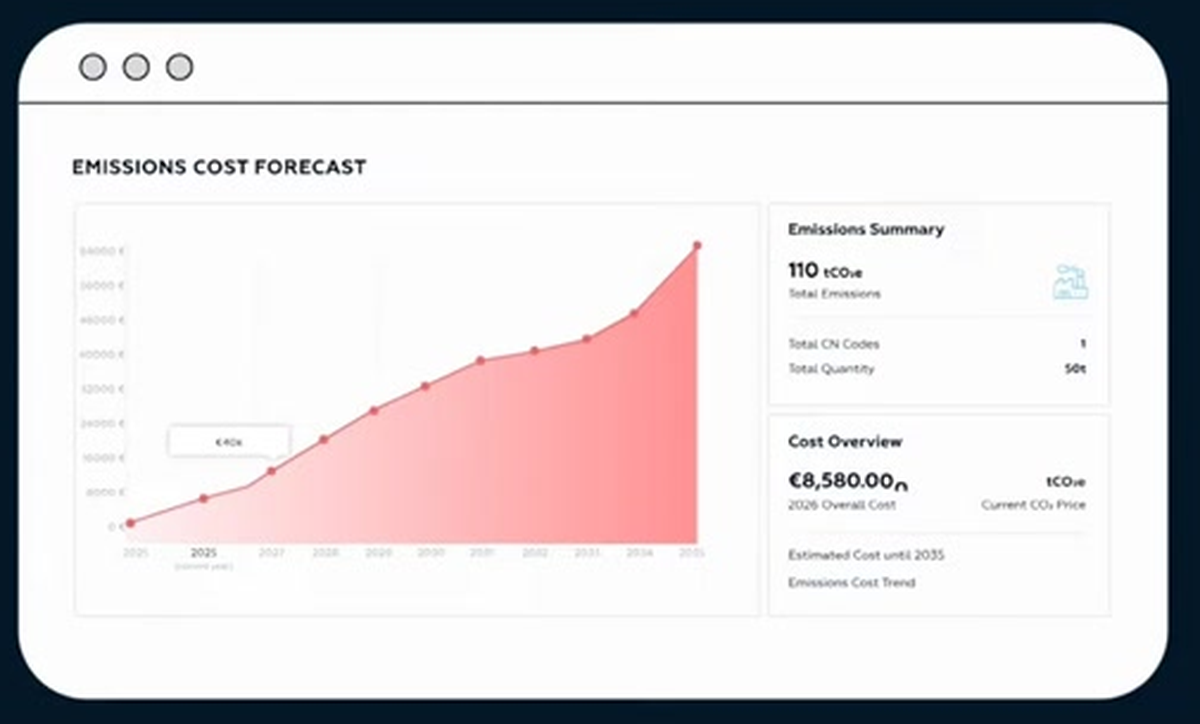
What it is – A guided CBAM workspace for all-sized importers. You collect supplier data, calculate the emissions built into your imports, and see what the certificates will cost you between now and 2034. It is part of Yodiwo’s DIY Sustainability Marketplace.
Key features
- Dashboard by product, CN code, country of origin and supplier: emissions, cost, and what is still exempt
- Your non-EU factories enter their own emissions data through a guided form
- Official default values applied when a supplier sends nothing, with the extra cost of that gap shown per supplier
- Cost forecast to 2034 on your own assumptions: import growth, certificate price, and the free allowance shrinking to zero
- Sourcing scenarios: price a supplier you have not signed with yet, and compare
- The whole regulation readable inside the tool, searchable by CN code and country of origin
- Click any number to see the factor used, where it comes from, and how the figure was reached
What sets it apart – Every CBAM tool uses the default values. This one lets you read them. The whole regulation sits inside the product on one searchable screen, which matters the first time somebody asks you where a number came from. The forecast is also built for a decision rather than a filing. You can price a supplier before you sign with them, so CBAM becomes a cost you can change instead of one you only report. Anything you collect here is reused by the carbon, Scope 3 and VSME tools beside it, and moves into EnGage when you outgrow self-serve. You can request a demo at yodiwo.com.
Pricing – Not published. Agreed on the demo call.
For a company, consider – You start with a demo, not a sign-up, and there is no published price.
Best for – Importers who want to control CBAM cost over the next ten years, not only file this year’s declaration. Also anyone who is being asked for other ESG data at the same time.
- CBAMtrack
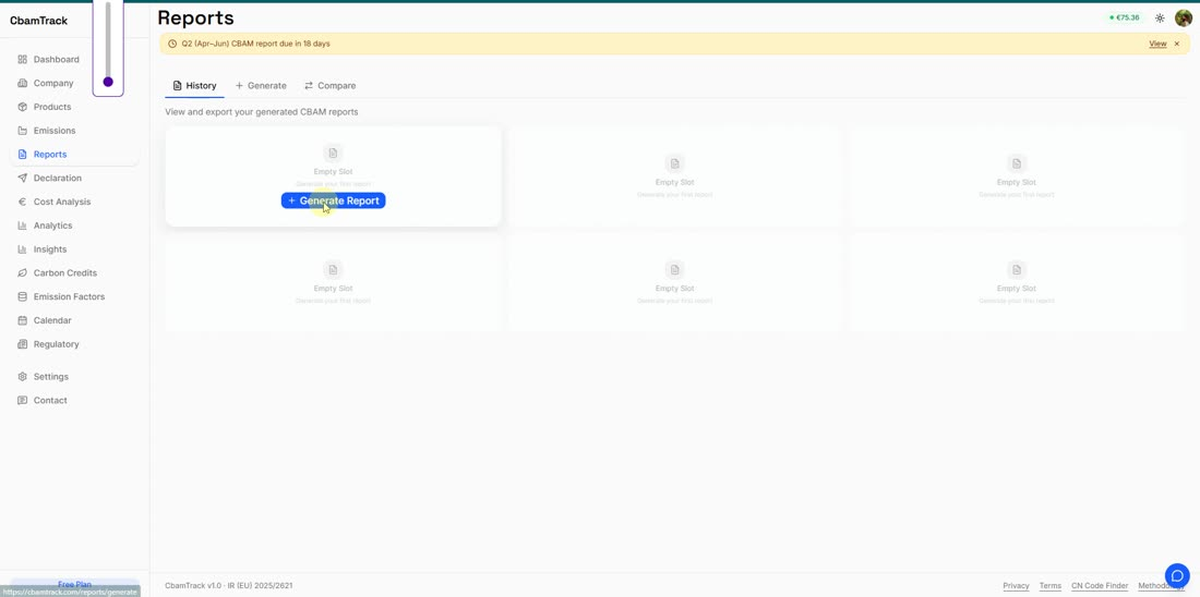
What it is – A CBAM platform built by RuffStack. You can register and use it straight away. Prices are published and there is a free tier.
Key features
- Free tier at €0: one product, one report, the calculator, PDF export and live carbon prices. No sales call and no credit card
- Calculation engine built to the EU implementing rules: default and real values, the shrinking free allowance applied automatically, and the default-value markup
- All six CBAM sectors with CN code coverage, including the three main ways steel is made and the exemption for indirect emissions on steel
- Export to PDF, XML and JSON. A five-step declaration assistant. Analytics and trade data
- Supplier portal on the top tier for collecting real data, with a full record of who sent what. Also what-if scenarios, alerts on odd figures, team accounts, and white-label branding for consultants
Pricing – Free at €0 for one product. Starter at €79 a month for six products, unlimited reports, XML export, analytics and team accounts. Growth at €199 a month for 30 products and everything else, including the supplier portal.
For a company, consider – If banks or customers also ask you for carbon figures, Scope 3 or a VSME report, this tool does CBAM only. That other data lives in a second system. Supplier data collection is self-service too. If your factories need persuading rather than a login link, the chasing is still yours. The interface is English only.
Best for – Small and mid-sized importers who want to be working in a CBAM tool today. Also consultants who want one login for many clients, under their own brand.
- The Sustainability Cloud (EU CBAM Importer)
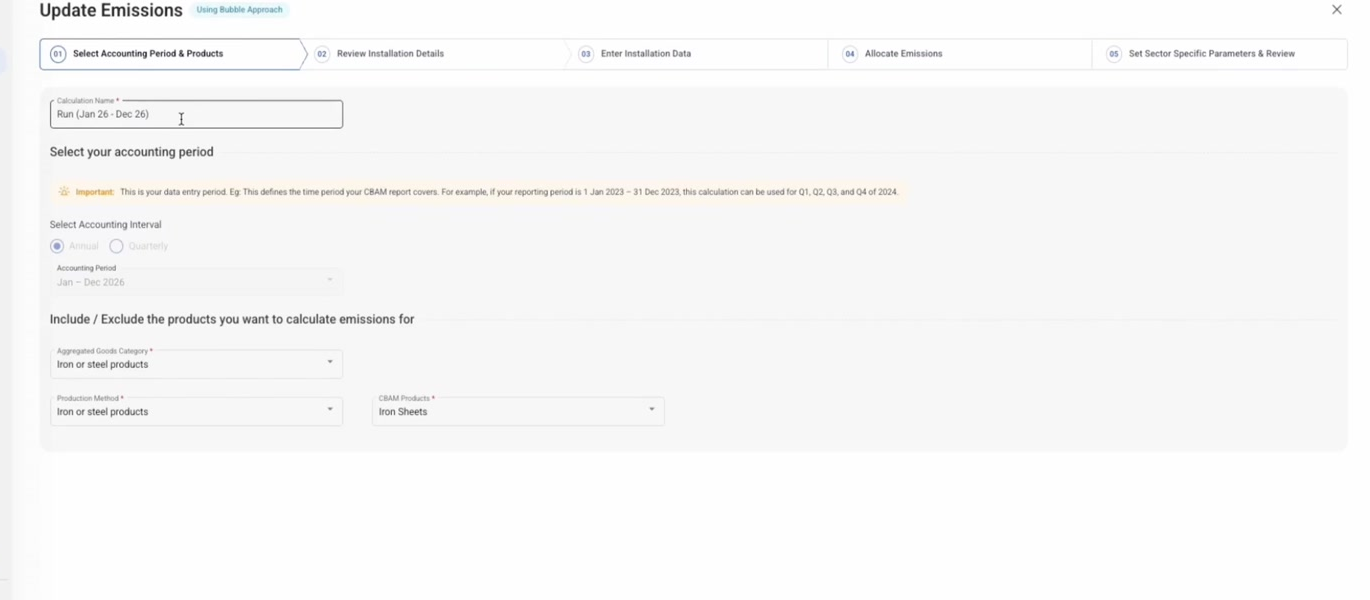
What it is – A CBAM tool for importers from LogicLadder Technologies, free to start. The same company sells a second product to non-EU factories, which helps them produce the data their EU customers need.
Key features
- Plans start at €0, and importers can produce CBAM reports free
- Ask suppliers anywhere in the world for emissions data, per import or per quarter, with comments, reminders, and the ability to accept or reject what they send
- Combines data from many suppliers into the EU’s own XML report format
- An assurance area and a verifier login, so the audit trail is ready when the verifier arrives
- Carbon cost forecasting, plus views that flag your most carbon-heavy imports and suppliers
- The exporter product walks a factory from setup, through its goods and input materials, to the XML the EU expects. This is the hardest part of CBAM: getting usable data out of a supplier
Pricing – Free to start. Higher tiers are on the vendor’s pricing page.
For a company, consider – If all you want is to file a declaration, you will be working inside a wider supply-chain ESG platform. It has more modules than you need. Its strongest feature is the exporter product, and that only helps if your suppliers actually use it.
Best for – Importers whose suppliers need real help producing data.
- Dubrink
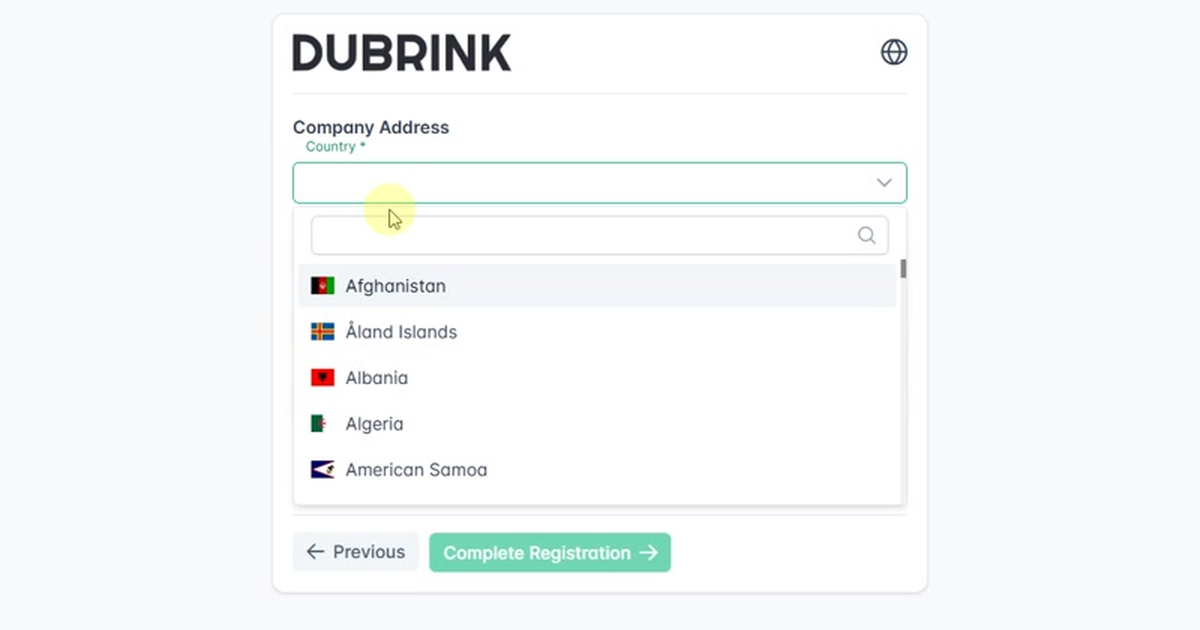
What it is – A CBAM platform from Rotterdam, built for everyone in the chain: importers, suppliers, distributors, customs agents, consultants and verifiers. Importers and suppliers buy separate licences.
Key features
- The supplier pays: if your supplier holds a paid licence, you use the platform free. The supplier enters data once and every EU customer can use it
- Links through to your supplier’s own suppliers, for chains with more than one step
- Calculates from real supplier data or from data you bring, with analytics and cost forecasting
- PDF reports on the free tier. PDF and XML on paid tiers
- Interface in 14 EU languages, and you can upload the EU’s own template instead of asking suppliers to retype
Pricing – Importer licences: free if your supplier holds a paid licence. Starter €1,990 a year for up to 1,000 tonnes and 10 suppliers. Premium €2,990 a year for up to 15,000 tonnes and 50 suppliers. Enterprise on request. Supplier licences: free, or €1,990 a year for premium.
For a company, consider – When we registered, we landed on a waiting list rather than in the product, with onboarding arranged by meeting. The prices are published, but expect a queue before you can work.
Best for – An importer and a supplier who are ready to use the same platform, especially where suppliers do not work in English.
- CORA (cora-online)
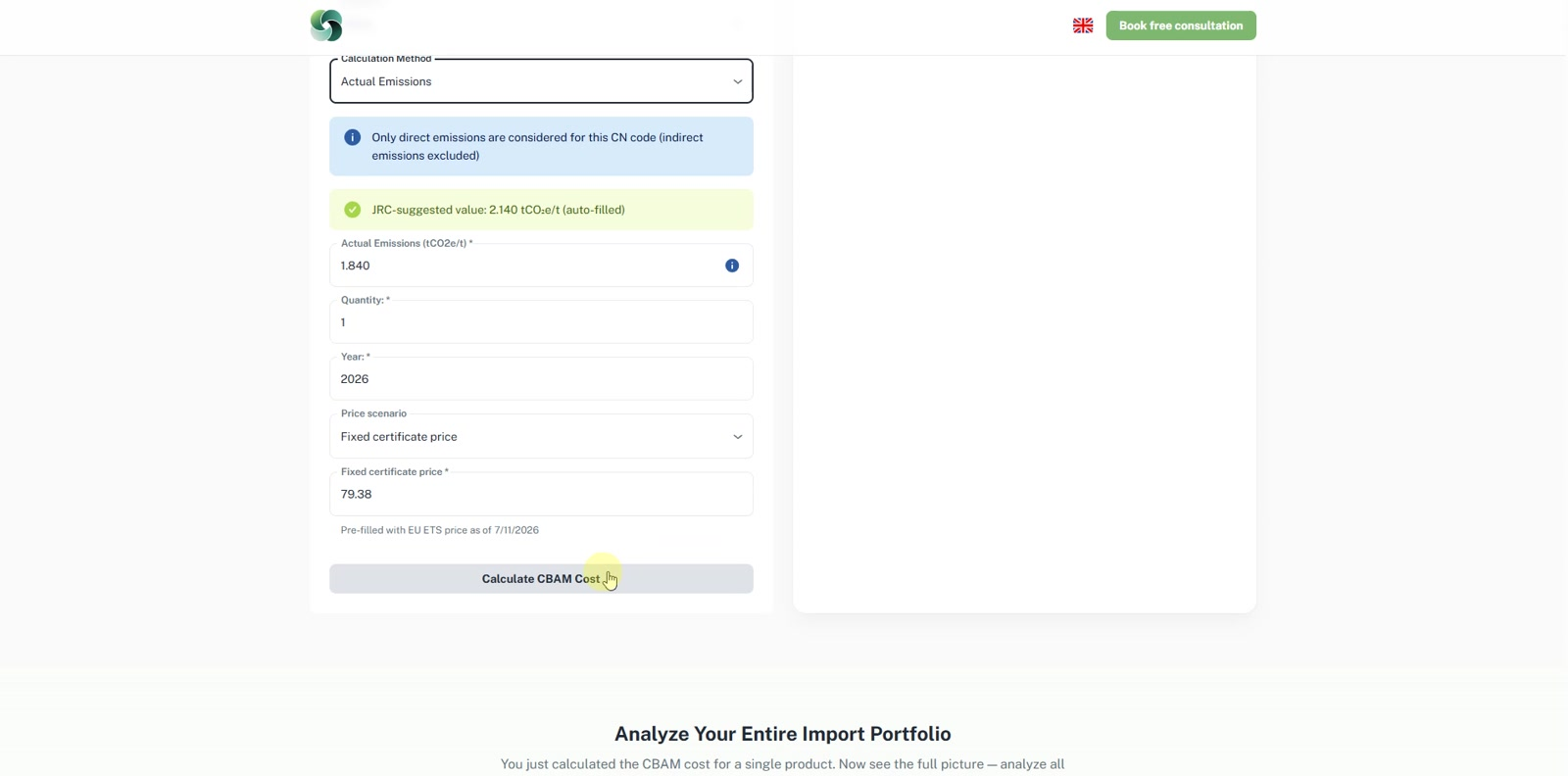
What it is – A free CBAM cost calculator that needs no account, in front of a full CBAM consulting service.
Key features
- Enter a CN code, a country and a method, and get a cost estimate at once, including the difference between default values and real data, projected to 2036
- A view across all your imports, which you can save and export
- Their team also does the work: supplier coordination, verification preparation and regulatory advice
Pricing – The calculator is free and needs no account. The real engagement is consulting, priced in conversation.
For a company, consider – The free part is a calculator, not a declaration workflow. There is no self-serve product to run end to end, and every route in the tool leads to booking a call.
Best for – Importers who want a fast, credible read on what CBAM will cost them. Also anyone who would rather hand the whole job to a service team.
Broader platforms with a CBAM module
A note on fit. The platforms below are very good at what they are built for: organisations with procurement, finance and sustainability teams, complex supplier networks, and budgets agreed by quote. That is also the catch. Multi-year simulators, due-diligence networks and company-wide carbon management are things a small importer pays for and rarely uses. A demo and rollout also takes weeks you may not have. They are listed because they are credible options, for the right size of company.
- ClimEase
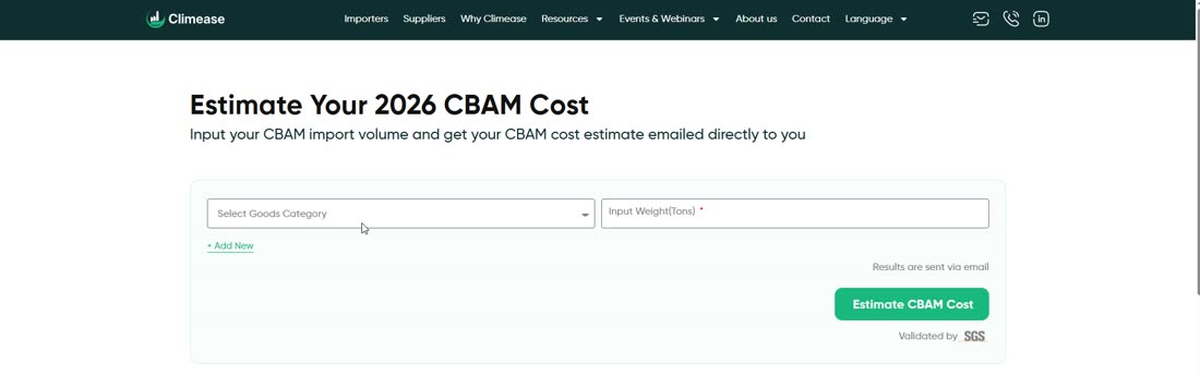
What it is – CBAM software with people attached, including Turkish- and Chinese-speaking staff who talk to your suppliers in their own language.
Key features
- Automatic supplier outreach, with a simple emissions survey the supplier fills in
- Their experts handle the difficult supplier conversations themselves
- Clear cost exposure, early warning on certificate timing, and help moving to lower-carbon suppliers. One customer reported cutting quarterly reporting time by about 90%
Pricing – Software plus services. Demo-led, with no published price.
For a company, consider – There is no free trial and nothing you can open by yourself. Delivery depends on their people, so the speed and cost of your first declaration are set in conversation. If you want to keep the work, and the knowledge, in-house, this model works against you.
Best for – Importers whose suppliers need persuading in Turkish or Chinese, not just a template.
- Cozero
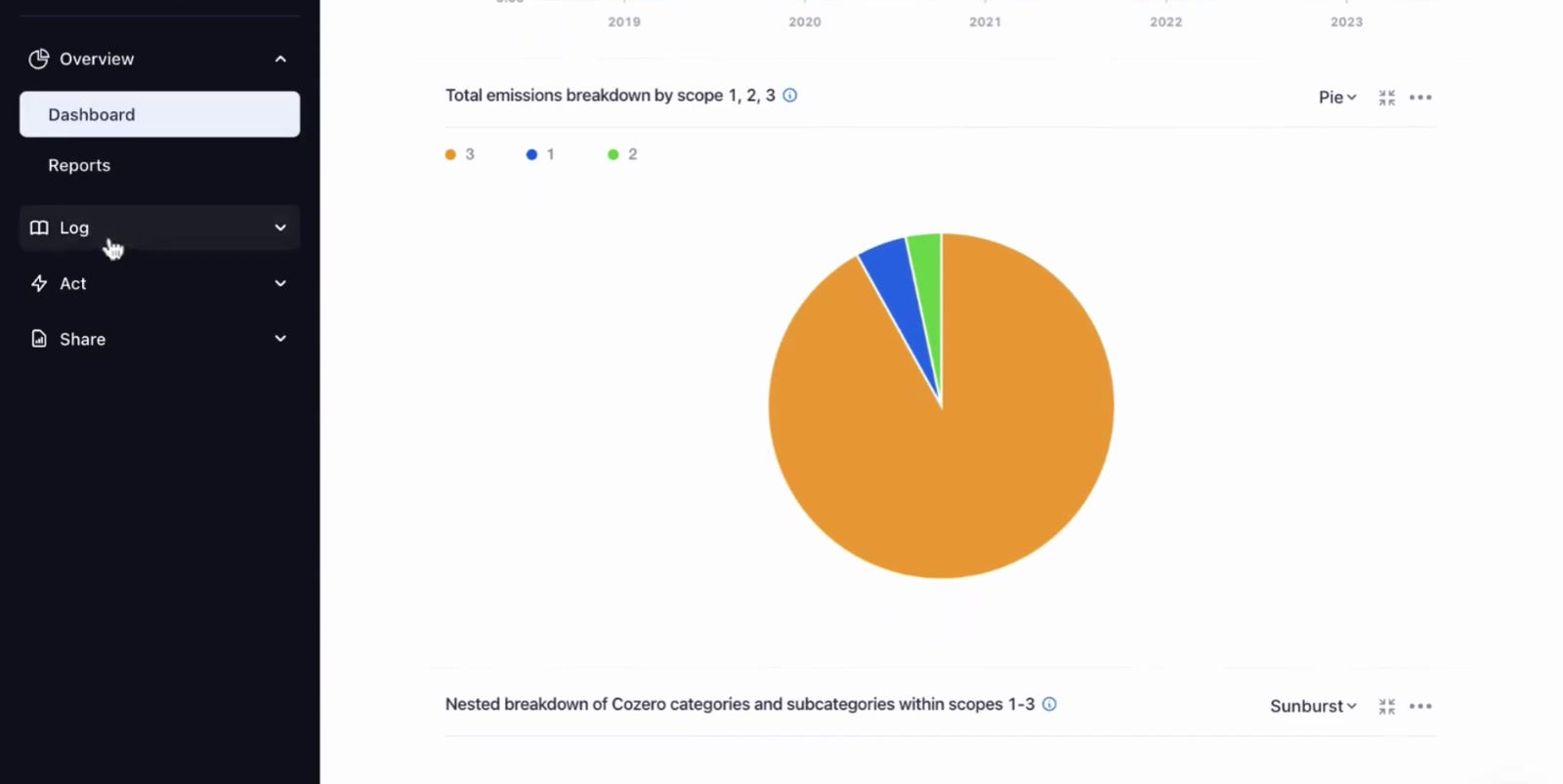
What it is – A carbon management platform with a CBAM module inside it.
Key features
- Automatic requests to suppliers for product carbon footprints and their own emission factors
- A CBAM dashboard tracking emissions and cost over time, and showing where in the chain the carbon sits
- CBAM data makes your Scope 3 figures more accurate across the wider platform, which also covers reduction planning and reporting to stakeholders
Pricing – By quote, after a demo.
For a company, consider – CBAM is one module of a full carbon platform, and the product tour covers all of it. Adopting it means taking on carbon management as a whole, not just filing a declaration.
Best for – Companies that want CBAM handled inside a serious, company-wide carbon programme.
- IntegrityNext
What it is – A supply-chain due-diligence platform with a complete CBAM workflow: upload customs data, model your exposure, engage suppliers, check what they send, and report.
Key features
- One traceable workflow, from customs upload through supplier engagement to the XML the registry accepts
- Suppliers can reply through a full or a simplified assessment, the official EU templates, or a guided screen
- A view comparing what suppliers report against the EU defaults, to show which figures look credible
- A multi-year cost simulator per CN code, under different price, volume and supplier assumptions
Pricing – By quote, after a demo.
For a company, consider – There is no free trial and no self-serve entry. Every route in runs through a booked demo. The CBAM module also assumes you will use the wider due-diligence network. If CBAM is your only supply-chain obligation, you are buying a suite to solve one job.
Best for – Larger importers who want procurement, finance and sustainability looking at CBAM cost on one shared view.
.
How to choose
Four questions narrow the list fast.
- Can your suppliers actually produce the data? The markup on default values makes real data worth chasing. So judge the tools by how they get it. A portal your suppliers log into. People who telephone them. A network where their data already sits. Or a template you email around.
- When is your deadline? Certificates go on sale in February 2027 and the first declaration is due 30 September 2027. But the data you need is being created, or lost, in your supply chain right now. A tool you can start today beats one that starts after a rollout.
- Is CBAM the whole job, or one thread of it? If banks and customers also ask for carbon figures, Scope 3 or a VSME, ESRS, etc report, a single-purpose tool means entering the same data twice. A tool whose CBAM data feeds the rest of your reporting covers more ground.
You need three things: supplier data collected properly, certificate cost under control, and a declaration that will survive verification. You also want to avoid CBAM becoming one more disconnected system. That points to a guided workspace whose data flows into the rest of your ESG reporting.